

Wildlife and nature conservation often invoke images of rangers on patrol, scientists tracking animals in the field, and volunteers restoring habitats. However, one of the most powerful conservation tools operates high above the terrain: the airplane. From monitoring endangered species to battling poaching and conducting environmental surveys, aircraft have become crucial assets in modern conservation efforts.
Why Airplanes Matter in Conservation
Many wildlife habitats are massive, isolated, and difficult to access by land. Forests, wetlands, deserts, mountain ranges, and marine coastlines can cover thousands of square miles. Airplanes allow conservationists to gather information quickly, safely, and cost-effectively across these large areas.
Airplanes are used for:
- Wildlife population surveys and censuses
- Anti-poaching patrols
- Tracking animal migrations
- Transporting endangered species
- Habitat monitoring and mapping
- Environmental research
- Search-and-rescue operations
- Disaster assessment and response
The aerial perspective provides scientists and conservation managers with information that would be impossible or excessively expensive to obtain solely from the ground.
LightHawk: Conservation Aviation Across North America
One of the world’s most recognized conservation aviation organizations is LightHawk.
Founded in 1979 by Michael Stewart, LightHawk is a nonprofit organization headquartered in Colorado and dedicated exclusively to supporting conservation through aviation. The organization connects conservation groups with a network of more than 300 volunteer pilots who donate their aircraft, expertise, and flight time to environmental causes. LightHawk’s mission is to accelerate conservation success through the power of flight.
Key Services Provided by LightHawk
Wildlife Monitoring
LightHawk conducts aerial surveys and telemetry flights to help biologists monitor wildlife populations. These flights support the tracking of species such as:
- California condors
- Pronghorn antelope
- Shorebirds
- Orcas
- Manatees
By providing aerial observation, researchers can gather data across extensive territories much faster than ground-based teams.
Endangered Species Recovery
The organization works with government agencies and conservation partners to transport endangered animals between breeding facilities and release sites. LightHawk has supported recovery programs involving:
- California condors
- Red wolves
- Mexican wolves
- Whooping cranes
- Black-footed ferrets
- White abalone
These specialized flights reduce transportation stress on animals and improve the success rates of conservation programs.
Ecosystem Protection
Beyond wildlife, LightHawk supports projects involving rivers, wetlands, coastlines, forests, and climate resilience initiatives. Conservation organizations use aerial imagery and observations to identify threats such as habitat destruction, water pollution, and unsustainable development.
In a recent reporting period, LightHawk completed more than 230 conservation flights supporting environmental initiatives across North America.
The Bateleurs: South Africa’s Environmental Air Force
Founded in 1998, The Bateleurs is a South African Non-Profit Company (NPC) that has become a model for volunteer-based environmental aviation. The Bateleurs describes itself as South Africa’s only environmental air force, providing free aerial support to conservation organizations, researchers, environmental advocates, government agencies, and community groups. The organization operates through a network of more than 220 volunteer pilots and aircraft owners who donate their time, expertise, and aircraft to environmental missions.
 Mission and Operating Model
The Bateleurs was created to give conservationists and decision-makers a panoramic view of environmental challenges that are difficult to understand from the ground. The organization provides aerial observation, photography, mapping, wildlife monitoring, and transport services at no cost to approved conservation beneficiaries. This unique model allows environmental organizations with limited budgets to access aviation resources that would otherwise be prohibitively expensive.
The organization’s volunteer pilots fly a wide range of aircraft, from light sport aircraft and fixed-wing airplanes to helicopters and larger aircraft. Because pilots donate their own aircraft and time, conservation funding can be directed toward mission-critical activities rather than aviation expenses.
Wildlife Conservation and Species Protection
The Bateleurs supports numerous wildlife conservation initiatives throughout Southern Africa. Its aircraft are used to:
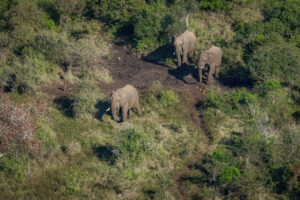
- Conduct wildlife population surveys and game counts
- Monitor endangered species
- Assist with anti-poaching operations
- Track animal movements across large landscapes
- Support wildlife relocation and translocation projects
- Conduct habitat connectivity assessments
The organization has worked with conservation partners to monitor and relocate species including African wild dogs, cheetahs, vultures, cranes, pangolins, rhinos, and other threatened wildlife. One notable project involved transporting African wild dogs to Mozambique’s Gorongosa National Park, helping restore a species that had been absent from the park for decades.
Anti-Poaching and Environmental Protection
Aerial surveillance has become an increasingly important conservation tool, and The Bateleurs has played a significant role in supporting anti-poaching efforts. Volunteer pilots conduct patrol flights over large reserves, assist with rhino protection operations, support wildlife crime investigations, and provide aerial coordination for conservation teams working in remote areas.
The organization also assists with wider environmental protection efforts by documenting illegal mining operations, monitoring habitat destruction, surveying wetlands, tracking pollution sources, and identifying environmental threats that may be invisible from ground level. These aerial observations often provide critical evidence for conservation planning, legal action, and environmental policy decisions.
Geographic Reach and Conservation Impact
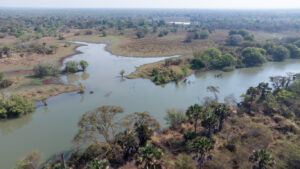 Since its formation, The Bateleurs has expanded its operations beyond South Africa into several African countries, including Mozambique, Namibia, Botswana, Zimbabwe, and Zambia. The organization reports having completed more than 1,000 missions in support of over 150 conservation organizations across approximately ten African countries.
The organization collaborates with a broad network of conservation partners, including wildlife research groups, protected-area managers, environmental nonprofits, and species recovery programs. By providing aviation support free of charge, The Bateleurs enables conservation organizations to extend their reach and effectiveness across some of Africa’s most important wildlife landscapes.
Emerging Technologies: Aircraft, Drones, and Artificial Intelligence
Today, airplanes are increasingly being complemented by drones and artificial intelligence systems. Researchers now use aerial imagery combined with machine learning to identify and count animals automatically, monitor migration routes, and analyze habitat conditions. Recent studies have demonstrated the effectiveness of drone-based wildlife monitoring systems for species including zebras, giraffes, painted dogs, and moose.
These technologies reduce survey costs, improve accuracy, and allow conservationists to monitor wildlife with minimal disturbance.
Full Service FBO in Toledo, Ohio
While environmental assessing aircraft are not commonly seen in Toledo, Grand Aire does fuel aircraft of all sizes. We are proud to operate the only 24/7/365 full-service FBO at the Eugene F. Kranz Toledo Express Airport (KTOL). We offer a wide variety of amenities for our guests, as well as services such as de-icing, baggage handling, aircraft catering, and more.
If your travels bring you to KTOL, let us put our experience to work for you. Give us a call at 1-800-70-GRAND or email our team directly at fbo-lineservice@grandaire.com.