When a shipment is time-critical, choosing the right air transportation solution can mean the difference between staying on schedule and experiencing costly delays. But not every shipment requires a dedicated aircraft.
In many instances, commercial air freight provides the speed, global reach, and cost efficiency needed to move cargo quickly. For urgent, complex, oversized, or highly specialized shipments, air charter can provide the additional flexibility and control needed to meet demanding transportation requirements.
So which option is right for your shipment? The answer depends on the type of cargo, destination, budget, and the timeline.
What Is Commercial Air Freight?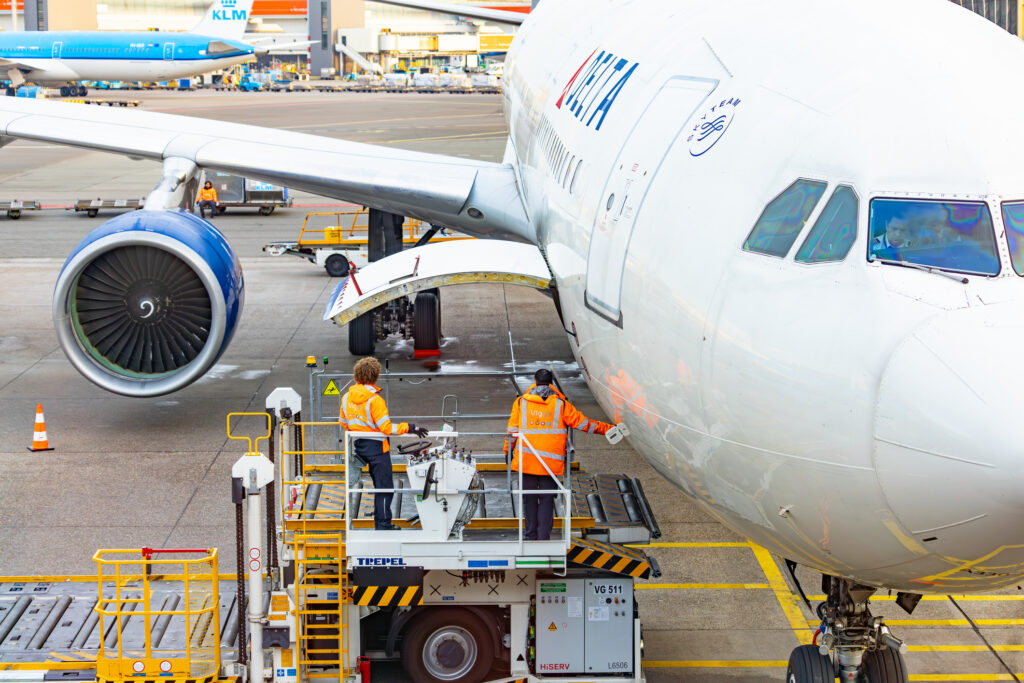
Commercial air freight involves moving cargo on a regularly scheduled passenger or cargo aircraft. Passenger planes include those operated by airlines such as American, Delta, United or Southwest. In this instance, freight is consolidated with other shipments and transported in the belly of the aircraft and travels according to the airline’s existing flight schedule.
Cargo planes are designed purely for freight, no passengers. They also adhere to established routes and flight schedules. Freight travels on the main deck of the aircraft since there is no seating for passengers.
With commercial air freight, cargo moves much faster than ocean or ground freight options can provide.
Commercial air freight is commonly used to transport:
- Electronics and technology products
- Automotive components
- Pharmaceuticals and medical supplies
- Retail merchandise
- Manufacturing parts and equipment
- High-value goods
What Is Air Charter?
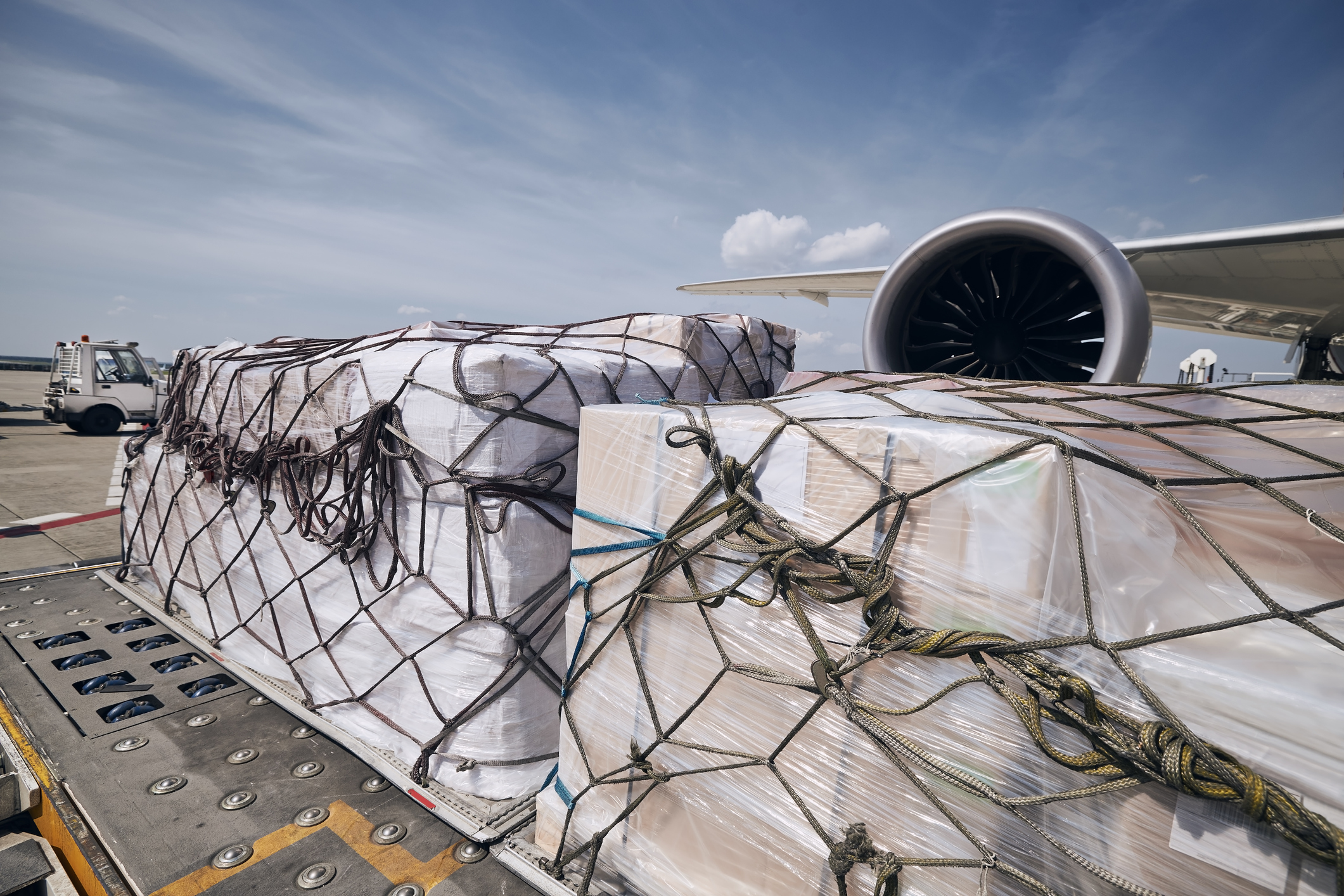
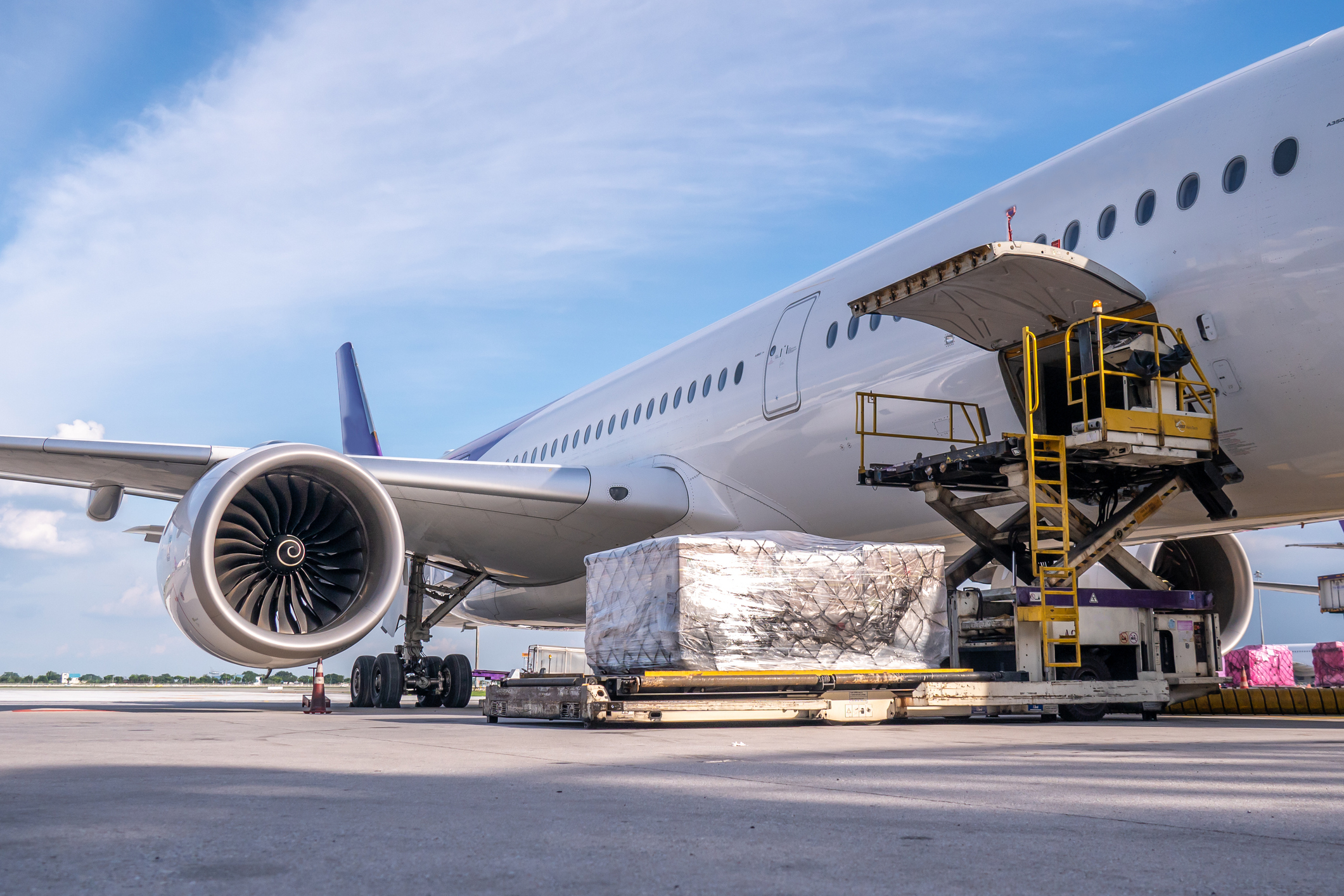
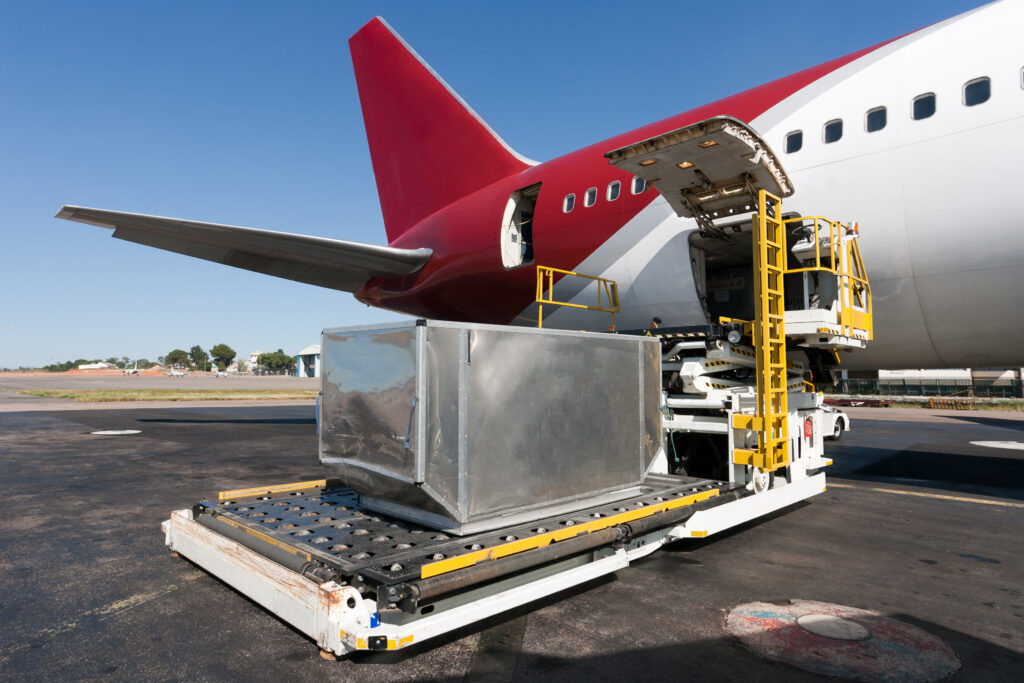 An air charter is a dedicated aircraft arranged specifically to transport cargo. With a charter, the aircraft, routing, departure schedule, and other logistics can be coordinated around the requirements of the shipment.
That flexibility makes air charter particularly useful when standard commercial air freight cannot meet the required timeline, cargo specifications, routing requirements, or destination.
Air charter is often used for:
- Emergency and time-critical cargo
- Aircraft-on-ground (AOG) parts
- Oversized, heavy, or unusually shaped cargo
- Critical manufacturing components
- Medical and surgical missions
- Disaster-response missions
- Government and defense transportation
- Shipments to locations not conveniently served by scheduled flights
Air Charter vs. Commercial Air Freight: Key Differences
While both transportation methods move cargo by air, they operate very differently.
-
Scheduling
Commercial air freight operates according to an airline’s existing flight schedule. A shipment must be booked on an available flight with a suitable route and cargo capacity.
Air charter provides considerably more scheduling flexibility. Instead of working around an existing commercial schedule, the transportation of cargo can be customized to meet the required departure and delivery timeline.
This distinction can become critical when a manufacturing line is waiting for a replacement component, an aircraft is grounded for lack of a part, or an emergency shipment cannot wait for the next available commercial flight.
-
Routing
Commercial air freight generally moves through established airline routes between airports.
Air charter offers greater flexibility in choosing departing and destination airports. This flexibility can be particularly valuable when cargo needs to reach a location that isn’t conveniently served by standard commercial routes.
-
Cargo Capacity and Aircraft Selection
Commercial airlines have established limits for cargo dimensions, weight, and specific handling requirements.
For standard freight, this is often sufficient. But shipments involving unusual dimensions, significant weight, specialized handling requirements, or large quantities of cargo, these restrictions may not be feasible.
Air charter provides access to aircraft specifically suited to a particular shipment. Depending on the aircraft selected, charter services may accommodate cargo that is difficult or impossible to move through conventional commercial air freight channels.
-
Speed
Commercial air freight is one of the fastest methods of moving cargo over long distances. However, the overall transit time can be affected by flight schedules, connections, cargo acceptance deadlines, airport handling, and available capacity.
For shipments that cannot wait, next-flight-out (NFO) service can provide an expedited commercial air freight option.
If this option doesn’t meet the required timeline, an air charter can provide another solution. It can reduce some of these scheduling constraints because the aircraft is dedicated to one, individual shipment.
For truly time-critical freight, eliminating unnecessary connections and waiting for available commercial capacity can be an important consideration.
-
Flexibility
Commercial air freight operates within established airline flight schedules and cargo capacity limitations. This leaves little to no “wiggle room” for essential freight timelines or space considerations.
Air charter provides much more flexibility because flights can be arranged to satisfy the shipment’s crucial schedule. Also, there are significantly less cargo size and quantity restrictions due to the vast aircraft selection available.
-
Cost
In general, commercial air freight is less expensive because the transportation cost is distributed among the multiple shipments aboard the plane.
Chartering an entire aircraft for the needs of one shipper tends to be more costly. However, the lowest transportation price isn’t always the lowest overall logistics cost.
Consider a manufacturing line waiting for a critical component. A delayed shipment could result in production downtime, missed customer commitments and additional labor costs.
For this reason, it is important to evaluate the total logistics impact, not simply the shipping price, when determining the ideal method of air transportation.
When Does Commercial Air Freight Make Sense?
Commercial air freight is often the optimal solution when:
- The shipment can work within an established flight schedule.
- The cargo meets standard airline size and weight requirements.
- Suitable cargo space is available.
- The origin and destination are well served by commercial air routes.
For many routine shipments, commercial air freight provides an effective combination of speed, reliability, and cost efficiency.
When Should You Consider Air Charter?
Air charter may be the best option when the requirements of the shipment extend beyond what a standard commercial flight can provide.
Common scenarios include:
Emergency Shipments
When a critical shipment is needed immediately, waiting for the next available commercial flight may not be practical. A chartered aircraft can fly to meet urgent transportation requirements.
Aircraft-on-Ground (AOG) Parts
If an aircraft is grounded because a required part isn’t available, every hour can matter. Air charter can be used to move critical aviation parts quickly.
Oversized or Specialized Cargo
Large machinery, industrial equipment, aerospace components, and other specialized cargo may not fit within the limitations of regular commercial air freight. An air charter allows for a broader selection of appropriate aircraft to meet the needs of the shipment.
Medical and Humanitarian Missions
Transportation for surgical teams and life-saving organs can require specialized aircraft, routing, coordination, and ground support.
In the case of disaster relief, emergency supplies may need to reach areas where commercial transportation schedules or routes are insufficient.
Government and Defense Requirements
Government agencies and contractors may have transportation requirements involving security, compliance, specialized cargo, or rapid deployment. These conditions can be more easily coordinated through a dedicated charter solution.
Air Charter vs. Commercial Air Freight: A Quick Comparison
|
Factor |
Commercial Air Freight |
Air Charter |
|
Scheduling |
Based on existing flights |
Customized to shipment requirements |
|
Routing |
Established airline routes |
Greater routing flexibility |
|
Aircraft |
Shared cargo capacity |
Dedicated aircraft |
|
Cargo |
Standard cargo requirements |
Can accommodate specialized requirements |
|
Speed |
Fast, but schedule-dependent |
Can be optimized for urgent shipments |
|
Flexibility |
Minimal |
High |
|
Cost |
Generally lower |
Generally higher |
|
Best for |
Routine and time-sensitive shipments |
Urgent, specialized, oversized or critical cargo |
Need to Move Critical Freight?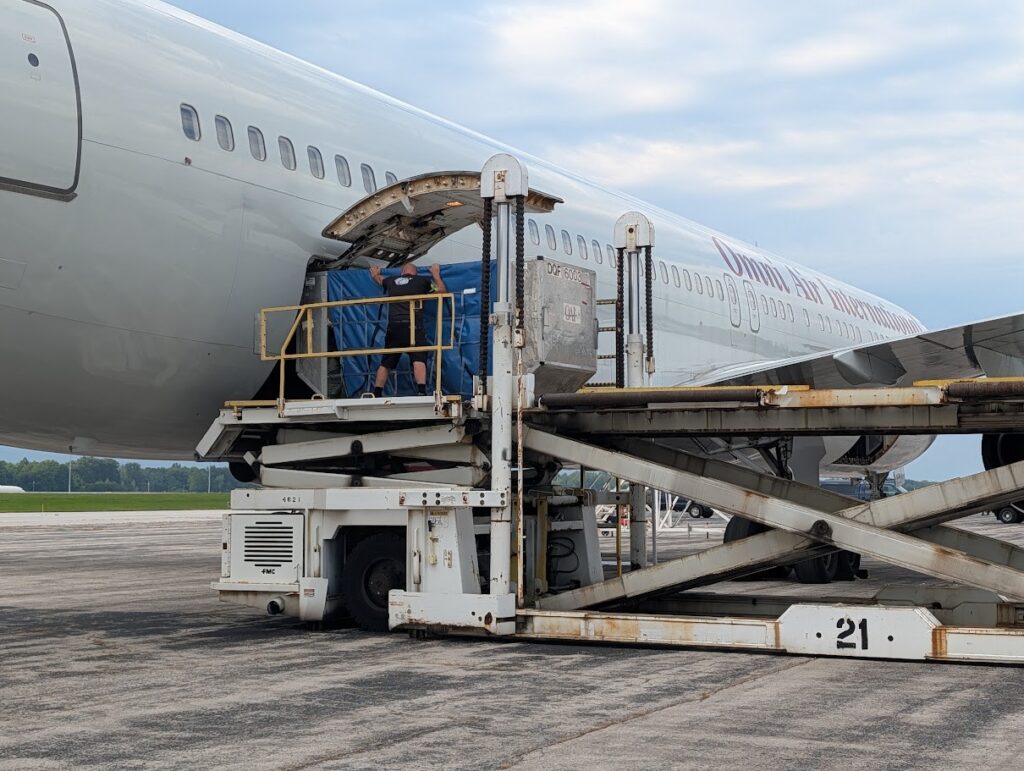
For more than 40 years, Grand Aire has provided air and ground transportation solutions for customers with demanding shipping schedules. Our team of Logistics Specialists are available 24/7/365 to quickly evaluate your shipment requirements and provide the optimal transportation solution to fit your needs.
Let us put our experience to work for you. Give us a call at 1-800-74-GRAND or email our team directly at logistics@grandaire.com.